7 Reasons Why Early Childhood Education Benefits Children
Enrolling your child in an early childhood education program is more than getting a few hours to yourself without children. Early childhood education is aimed at giving children a head start on skills that will benefit them for the rest of their lives.
If you’re still on the fence about whether to enroll your child in an early childhood education program, here are 7 reasons that Milestone’s Learning Center quality education program would benefit your child.
1. Academic Preparation
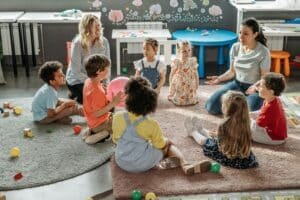
Kindergarten can be challenging for many reasons, but learning the rules of “kindergarten etiquette” shouldn’t be one of them! At an early childhood education program, your child will practice important social and structural rules like raising their hand before speaking, standing in a line, waiting for their group to finish, problem-solving in a group, and so much more!
Knowing these simple skills will give your child so much confidence on their first day of kindergarten. They won’t be anxious over how to act or what to do; they’ll already know! This means your child can focus on their academic learning so they can have an excellent foundation for their educational future.
2. Early Academic Exposure
An early childhood education program will not only prepare your child for how to act and what to do in kindergarten, but your child will have a head start on their academics!
Children in a quality early childhood education program will learn basic academic concepts like numbers, letters, shapes, colors, and more. They will also be introduced to basic math and reading concepts, and have plenty of exposure to arts and crafts.
 3. Improved Cognitive Development
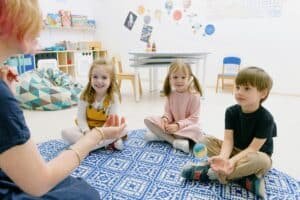
At Milestones Learning Center , your child will have additional opportunities to grow their cognitive development through our engaging education program. Problem-solving and critical thinking are best learned through exploration, investigation, and hands-on activities. Our education program encourages children to learn and grow through activities, games, storytelling, and structured and independent play.
4. Social Skills
Children must learn to interact with a variety of peers and adults in kindergarten. This takes skill and practice! An early childhood education program is an excellent, safe environment for kids to practice these essential skills they will need in kindergarten and beyond!
The staff at Milestones Learning Center are caring and kind, helping children learn to share, take turns, resolve conflicts, and care for their peers.
5. Emotional Regulation
Kindergarten can be a confusing time for a child who has never been away from home. Not only are they separated from the safety
of their parents, but they also have to learn to respond to other authority figures and how to interact with peers. This can lead to anxiety and fear that can have detrimental effects on a child’s social and academic future.
Giving children a year to practice emotional regulation can significantly improve their enjoyment of and success in kindergarten. With the caring attention of the staff at Milestone’s Learning Center, your child can learn to understand and manage their emotions, build resilience, and boost self-control.
6. Improved Academic Performance:
Studies have shown that children who attend a quality early childhood education program like Milestone’s Learning Center have higher grades throughout school and are more likely to graduate high school. Higher grades throughout school mean your child has the potential to gain higher education, impacting their future earning potential. Early childhood education programs are an investment in your child’s future!
7. Special Education Identification
Enrolling your child in an early childhood education program can help identify any need for special education. This is beneficial for you and your child!
Your child can receive interventions early, which can prevent the need for greater special education services later. With early interventions, your child can stay on track with their peers. This is also beneficial for parents because it saves you from unnecessary IEP meetings and therapy appointments.
Enroll at Milestones Learning Center Today!
Milestones Learning Center offers an outstanding early childhood education program that will prepare your child for kindergarten and beyond! Ready to get started? Contact us today!
Help! My Child Has Separation Anxiety
 Separation anxiety is a completely normal developmental milestone for your child–but that doesn’t make it easy to handle! Sometimes even parents can experience separation anxiety, especially if their child throws a tantrum at dropoff.
Neither you nor your child wants to experience separation anxiety, so how can you help your child overcome their fears and have an uneventful dropoff? Here are 6 tips that parents find helpful.
1. Foster Independence At Home
Because your child starts out being completely helpless, it’s easy to do everything for your child, even when they are capable of doing things themselves. Parents are faster, cleaner, and more accurate at things like getting your child dressed, fed, and cleaned up.
But parents have to be careful not to rob their children of the opportunity to learn independence at a young age. While it doesn’t mean parents should never help their children, encouraging your child’s independence is an excellent way to reduce separation anxiety.
When a child feels successful at being independent at home, they will naturally feel confident about being successful in daycare. They know they don’t have to rely on their parents to take care of them; they can take care of themselves!
Fostering independence can start even in infancy. For instance, during play time, you can perform a task and then say “Molly’s turn!” or “Molly do it!” At first help your child complete the task, but you’ll soon find this fun game can help them realize they can play independently.
For toddlers and young children, plan for extra time for them to accomplish tasks on their own. Let them pick out their clothes and dress themselves, serve their own meals, and perform simple tasks like putting silverware in the dishwasher. Be sure to verbally praise and reinforce their efforts.
2. Use Visual Images to Represent Time
A contributing factor to separation anxiety is that children don’t understand the passing of time. It is understandably scary to hear “your mom will be here in two hours” when you have no idea how long two hours is!
Printing out a schedule with bright colors and images can help your child visualize their day. You can even give a copy to your child’s classroom teacher to help them understand time.
 3. Give a Security Object
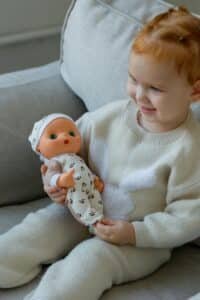
Whether it’s a blanket, lovey, stuffed toy, or other object, a security toy will help your child feel calmer upon drop off. A security object will help your child stay connected with you, even when they can’t see you.
Soft or fabric toys are generally the best security toys because they are easy to cuddle with. They even absorb your scent so that your child (especially babies, who often recognize their parents by scent rather than sight) can feel a connection to you.
4. Be a Model
Your child looks up to you in everything, and that includes how they should act during a drop off. If they sense you are anxious, sad, frustrated, or annoyed, this will only heighten your child’s anxiety and the intensity of an ensuing tantrum.
Resolve to be a calm, confident, caring parent at drop off.
5. Be Quick 
Give hugs and kisses, but don’t belabor drop off; it’s not good for you or your child. Then, it’s ok to leave! Your child may cry, but this shouldn’t deter you from leaving. You shouldn’t feel guilty or anxious.
It’s a paternal instinct to comfort our child when they are sad, but returning over and over again will only add to everyone’s frustration. It will take longer for your child to settle down because they think you will return if they just keep crying. Instead, be genuine in your affection, but keep your drop off short and sweet.
6. Have a Drop Off Routine
It’s never too late to develop a special drop off routine! These can be fun and suit the age and needs of your child.
- A silly handshake
- A sequence of big and little hugs and kisses
- A short song or rhyme
- An affirmation like “I am strong and brave”

It’s also never too early to develop a special drop off routine! For babies, you can:
- Sing a little song, or do a simple nursery rhyme like “This Little Piggy” or “Pat a Cake”
- Give their security toy a kiss and then hand them the toy
- Play a short tickle game
Conclusion
Remember, separation anxiety is normal and even healthy. It shows your child loves you and feels secure and happy with you.
Separation anxiety is also temporary. The more you and your child practice, the easier drop off will get. Your child will eventually learn that you do return, and you will eventually grow accustomed to temporary separation.
At Milestones Learning Center, our teachers are skilled at helping children gain confidence and independence in their classrooms. They will help your child become comfortable in their new environment, ready to grow and reach new milestones.
Transitioning to Normal Sleep Routines after the Holidays
 Whether or not you let your child stay up until midnight to usher in the new year, the aftermath of the holidays can leave everyone feeling a little worn out. Children often return to daycare feeling overtired and a bit emotionally overwhelmed. But the new year is the perfect time to reset routines. You and your child may be aching for the normalcy of a regular schedule again, and one of the best places to start is with bedtime. Re-establishing a regular bedtime and nap time routine (when age-appropriate) will help your child be rested and ready to learn.
Importance of Sleep
Consistent sleep is vitally important for a child’s physical development, cognitive function, and emotional regulation. When children get enough sleep they are able to better handle big emotions, focus and participate more during the day, and their immune systems are stronger at fighting off sickness. Sleep plays a huge role in behavior, as well. One article from the Mayo Clinic states, “Children who don’t get a sufficient amount of sleep may not appear to be sleepy. Instead, they may struggle with attentiveness, hyperactivity, aggression or disruptive behavior.” It is not surprising that studies have shown, as the National Institutes of Health summarizes, “shorter sleep is associated with more observed and parental-reported behavioral problems and more rule-breaking” for children of all ages.
Age-Specific Sleep Recommendations
According to the American Academy of Family Physicians (AAFP) and the Centers for Disease Control (CDC).
 Infants (6-12 Months)
Total Sleep: 12-16 hours in 24 hours.
Night Sleep: 9-12 hours
Naps: 2-3 naps per day
Typical Bedtime: 6:30-8:00 pm
Putting babies down drowsy but awake can support good sleep habits as the child learns to self-soothe to sleep, an important developmental skill.
Toddlers (1-2 Years)
Total Sleep: 11-14 hours
Night Sleep: 10-12 hours
Naps: 1-2 per day
Typical Bedtime: 6:30-7:30 pm
Keep toddler bedtime routines calm and consistent.
Preschool (3-5 Years)
Total Sleep: 10-13 hours
Night Sleep: 10-12 hours
Naps: 0-1 nap per day
Typical Bedtime: 7:00-8:00pm
Even if a child is unable to fall asleep during nap time, having the child still take a consistent quiet time is healthy and supports emotional regulation.
School Age (5-7)
Total Sleep: 9-12 hours
Night Sleep: 9-12 hours
Naps: none
Typical Bedtime: 7:30-8:30
Try to keep bedtimes consistent even on weekends to avoid Monday morning drowsiness.
Tips for Resetting Bedtime After the Holidays
If your schedule has gone out the window during the holidays or if your child’s bedtime has drifted later and later, little steps toward regularity make a big difference. It may help to adjust the bedtime gradually by moving bedtime 15 minutes earlier every few nights. Get back to a calming night time routine. This may include a bath, books, a cuddle, or prayer time.
Try to limit screens at least an hour before bed. Screens emit blue light which signals to the brain that it is the middle of the day. Blue light interferes with melatonin production–the hormone the body produces to make you sleepy and prepare your body for deep rest. Unfortunately, screens at night negatively affect how sleepy your child will feel, how easily they will fall asleep, and how deeply they will sleep throughout the night.
Healthy Sleep Habits at Milestones Learning Center
Milestones Learning Center reinforces healthy sleep routines through age-appropriate nap and rest times, calm transitions, predictable schedules, and open communication with families. Learn more about our mission at Milestones Learning Center, helping your child sleep, play, and grow into their best self.

Beloved Books for Toddlers
 There are few things more beneficial and beautiful than reading aloud to your little one. Read aloud becomes a time when toddlers slow down, snuggle in, and connect with their parent or caregiver. Reading aloud is also immensely important for a child’s cognitive and language development. Here are some classic and beloved books to read aloud with your toddler, organized by age group. (Keep in mind that ages are approximate. Many books span multiple stages, and it is always okay if a child enjoys a book earlier or later than listed.)
0-12 Months
Board books with simple images, great for short attention spans.
- Peek-a-Who? – by Nina Laden. This was the book that made my children fall in love with books. Babies always love the mirror at the end, accompanied by the text, “peek… a… YOU!”
- Baby Faces – by Margaret Miller. Simple photos of baby expressions that children love to imitate.
- First 100 Words – by Roger Priddy. A great way for children to learn the names of everyday objects.
- Where Is Baby’s Home? – by Karen Katz. A lift-the-flap book with animals.
- Moo, Baa, La La La – by Sandra Boynton. We love Sandra Boynton books, and this is a short and funny rhyme about the sounds animals make — and don’t make.
12-24 Months
Predictable patterns, counting, colors, animal sounds, and lift-the-flap elements keep young ones engaged.
- Brown Bear, Brown Bear, What Do You See? – by Bill Martin Jr. & Eric Carle. The repetitive and predictable text helps children learn colors and animals. Carle’s signature collage technique makes the artwork vivid and unforgettable.
- The Very Hungry Caterpillar – by Eric Carle. Children learn the days of the week and the names of fruits and other fun foods in this whimsical story of transformation. Again, Carle’s illustrations make this book charming and full of life.
- Goodnight Moon – by Margaret Wise Brown. Children can’t seem to get enough of this classic story with its soothing rhythm and distinctive, high-contrast illustrations. Bonus: For any Pride and Prejudice Fans, Goodnight Mr. Darcy is a delightful parody that might be even more fun for parents.
- Dear Zoo – by Rod Campbell. A cute lift-the-flap book with animal surprises.
- Little Blue Truck – by Alice Schertle. Children love the animal sounds in this story about kindness and friendship. There are
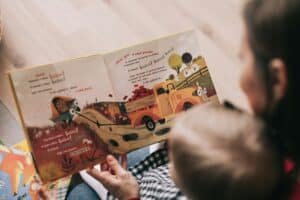 iterations for every season, like Little Blue Truck’s Springtime.
 - Blue Hat, Green Hat – by Sandra Boynton. This story makes my children laugh like no other book. Children learn the names of colors and clothes and very memorably how not to wear them.
2-3 Years
Simple storylines, rhyming, and humor keep these books interesting for toddlers and support literacy and emotional intelligence.
- Chicka Chicka Boom Boom – by Bill Martin Jr. & John Archambault. A fun way to reinforce the alphabet. You might be surprised how quickly your child memorizes this rhythmic story.
- If You Give a Mouse a Cookie – by Laura Numeroff. If your child likes this story, they will likely love the Amazon Prime series based on the book.
- Llama Llama Red Pajama – by Anne Dewdney. This story is a humorous and lighthearted way to talk about big emotions, especially at bedtime.
- Sheep in a Jeep – by Nancy E. Shaw. A terse and funny rhyming book with humorous and charming colored-pencil illustrations.
- How Do Dinosaurs Say Goodnight? – by Jane Yolen. Children learn bedtime behaviors with humorous dinosaur characters.

Tips for Reading
- Make it interactive – point to objects, make sounds, ask questions like, “where is the sun?” or, “do you see boots in this picture?” Feel free to go off script.
- Use different voices – you might be surprised how fun this makes reading for your toddler — and for you
- Follow their lead – even if it means reading a book many times. Children crave repetition and learn from hearing a story over and over.
At Milestones Learning Center we are all about books. We love seeing firsthand how children delight in stories and grow in vocabulary, intuition, curiosity, and emotional intelligence through regular reading times. Contact us to learn more or to schedule a tour. We’d love to meet you!
Tips for Holiday Baking With Your Child
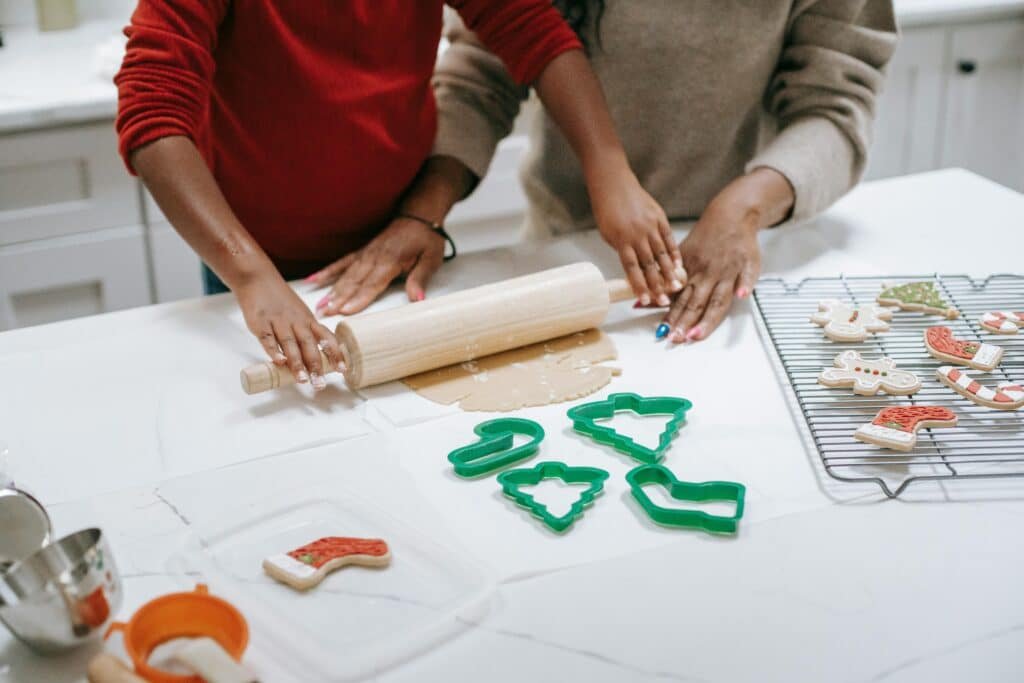
One of the best ways to enjoy the warmth, excitement, and sweetness of the holiday season is to start a tradition of baking treats with your child. Whether you are baking cookies for a classroom party or whipping up treats for neighbors, involving your child in holiday baking is an excellent way to teach your child new skills, enjoy quality time together, and make lasting holiday memories. Here are some tips to make your holiday baking successful and stress-free.
1. Reinforce Cooking Safety Rules
Remind your child to not use the stove or oven without permission, and stay close by when they are near hot surfaces and electrical appliances. Reinforcing kitchen safety rules early on will help build lifelong habits.
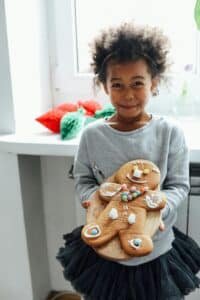 2. Set Up a Kid-Friendly Workspace and Embrace Mess
Set your child up for success by clearing a section of the counter or table to give your child their own “baking zone.” Use a silicone placemat, cutting board, or baking sheet as a tabletop surface to contain flour or sprinkles and minimize cleanup. Baking with children can get messy but expecting it will help manage stress when spills and drips happen. Keep a damp cloth close by to clean up messes as you go and have your child wear an apron or old t-shirt.
3. Invite Your Child to Pick the Recipe
The key to having your child picking the recipe and not hating yourself for it afterwards is to preselect a few kid-friendly recipes you feel confident in executing.
Here are some fun, holiday-themed recipe ideas:
- Healthy No-Bake Reindeer Bites
- Santa Hat Cupcakes
- Christmas Bark
- Chocolate Candy Cane Hearts
- Reindeer Rice Crispy Treats
- Eggnog Sugar Cookies
4. Give Age-Appropriate Tasks
Children are excited to be entrusted with real responsibilities. Tasks for younger children could include:
- pouring pre-measured ingredients
- stirring batter
- pressing cookie cutters

- decorating cooled cookies
- spreading icing on a cake or pouring glaze (with assistance)
- arranging cookies on a plate
Older children may help reading the recipe, measuring ingredients with supervision, or cracking eggs. Have younger children practice counting, and for older children, baking offers a fun opportunity to reinforce concepts like fractions and multiplication when doubling or tripling a recipe.
5. Make it Silly
Try coming up with designated titles for each person participating, like “Chef,” “Master Baker,” or “Muffin Man.” While baking together, you can refer to each other by these titles: “would you please pass the stirring spoon, Master Baker Braydon?” Making the moment fun — which for a child often means silly — will help create lasting memories for everyone.
6. Make Cleanup Part of the Fun
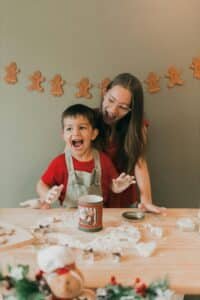
When you turn clean up into a game, kids scramble to join in: who can gather the most cookie cutters, or who can wipe off the counter the best so that no crumbs are left? Or you can try setting a timer for five or ten minutes and race the clock to see if you can clean everything up before the timer goes off. Kids love to participate in cleanup when they see you eagerly and cheerfully leading the way, and engaging children in cleanup teaches them responsibility and good lifelong habits.
Holiday baking is not just about making treats — it’s about making sweet memories you and your child will cherish. A little planning, a little patience, and a lot of sprinkles go a long way. Milestones Learning Center is an environment where the holidays are made intentional for fun, creativity, and connection. Contact us to today to learn more.
Teaching Gratitude in Early Childhood
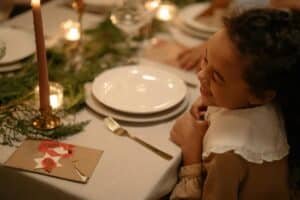 The holidays give us lots of opportunities to be grateful. Thanksgiving is, of course, a holiday about being grateful, but it is also a good time to teach children about thankfulness, particularly in looking ahead to holidays like Christmas and Hanukah where many children anticipate receiving gifts. At Milestones Learning Center, we celebrate the season in part by using this time to teach children how to be thankful. Here are four ways you can do this at home.
1. Say “Thank You” Every Day
One of the best way to teach your child to say thank you is to model it. Say “thank you” to your partner for washing the dishes. Say “thank you” to your children for putting their dirty plates in the sink or cleaning up the milk that dripped onto the table. Say “thank you” to the cashier. Say “thank you” to the server at the restaurant when she refills your water. The more children hear you expressing gratitude, the more likely they are to follow suit.
You can also whisper a reminder in your child’s ear to say thank you when they are out. Whispering a reminder avoids the awkward “what do we say?” reminder in front of stranger that may put your child on the spot or make them feel resentful. The goal is that saying “thank you” becomes second nature for your child, and it will likely become that way if it is second nature for you.
2. Write “Thank You” Notes
When your child receives a gift, there is no better way to express thanks than with a hand-written note. In a culture where everything is fast-paced and texting is so easy, writing a note with your child expresses thankfulness in a concrete way. Here are
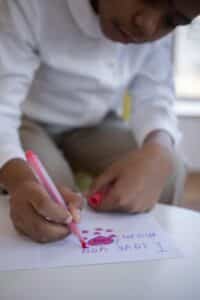
some tips for writing thank you notes with your children.
- It’s never too late to send a thank you.
- If your child is preschool age, write the note for them but use their exact words. They may want to sign their name.
- Ask your child what they liked best about the gift. How did it make them feel? Try to be specific.
- If the gift was money, don’t mention the amount; instead, have your child say what he wants to buy with the money.
- Even if your child doesn’t like the gift, thank the giver for their thoughtfulness and generosity.
3. Teach Delayed Gratification
It is hard to resist your child begging for the greatest new this or that, but it is worth it. Teaching your child to wait for what they want builds excitement and gratification and increases the enjoyment of a thing when it is received. Another way to teach patience and diligence is to have your child work to earn money for part or all of the item. Help them to see the value of a dollar and to associate hard work with monetary reward, a skill they will need to harness later in life. Depending on the age of the child, hiring them for various jobs around the house may not be much of an actual help to you. But the important thing is that you are teaching the principles of hard work and reward. Hire them to “help” you pull little weeds in the front flower bed, or sort laundry, or wipe down the fronts of the cabinets. Children gain a sense of accomplishment when they are able to do the same kinds of work they see you doing, and are able to participate in buying the things that they want.
4. Count Your Blessings
Find ways to be thankful for the things you have. Listen to your child and prompt them with questions like, “what made you smile today?” “What was your favorite part of the trip to Gramdma’s?” “What was your favorite thing that we ate today?”
Maybe you find time to count your blessings during bedtime prayers. Maybe it is with a thankfulness jar, where each person puts in slips of paper expressing what they are grateful for. Thanksgiving dinner is a great time to read what is in the jar. Another idea from Focus on the Family is to play an alphabet game during a car ride where you have to come up with something you are thankful for that starts with each consecutive letter of the alphabet. “Thank you for ASKING how I am doing”; “thank you for playing BALL with me”; “thank you for CAMPING with me last month.” If you have multiple children, they can thank each other for things too! This is a great game to redirect children to if they are arguing.
At Milestones Learning Center we are always looking for ways to grow in expressing gratitude. Contact us today to see what we have to offer your family, and have a Happy Thanksgiving.