
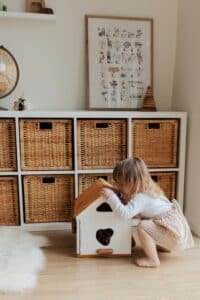
 Play is important work for a child. It is vital to the development of brain structure and function, and when children play, studies show they are expanding neural connectivity and improving in social-emotional skills along with executive function. Unstructured, independent play is not just a way for a child to keep themselves occupied without the intervention of a caregiver; it is a way for them to develop autonomy, improve confidence, hone problem-solving skills, and grow in creativity and imagination. At daycare and at home, making opportunities for a child to direct their own play sets them up for lifelong learning.
Importance of Solo Play
When a child engages in independent play they are reinforcing the confidence that they can entertain themselves. They realize they do not need a parent or caregiver to constantly direct their games, invent their activities, or even to play alongside them (although playing with your child has many benefits of its own and we encourage this at different times for different reasons). Through free play, children grow in problem-solving skills, such as those needed to put together a puzzle or build a structure with blocks. They improve attention span through persisting in an activity without interruptions. Without a caregiver dictating to them what to do, they grow in creative experimentation and imagination. Studies show that free play at a young age predicts improved self-regulation years later; the more time children spend in unstructured, independent free play, the better their skills are in self-regulation years later.
Independent Play by Age
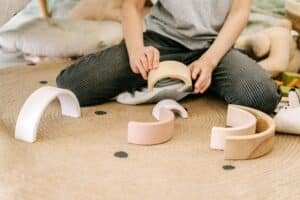
Expectations for independent play should be appropriate to the age of the child. Babies between 6 months to 1 year old may only be able to play by themselves for 5-15 minutes. By two years old, however, most children should be able to play by themselves for 30 minutes.
How to Introduce Independent Play
- Make it a part of their routine. Have your child spend a small amount of time alone each day to get used to the idea, such as right after dinner.
- Stay close by. Independent play does not mean unsupervised play. However, you want to encourage your child to develop their own agency in determining their play. Staying nearby and aware while also giving them freedom to direct their own activities is key. If your child is especially clingy, you may need to play with them for a minute or two and then leave them to continue the playing on their own until they gain more confidence.
- Offer open-ended toys for imaginative play. Opt for toys that can be used in multiple ways such as stacking cups, blocks, play food, dolls, stuffed animals, and art supplies.
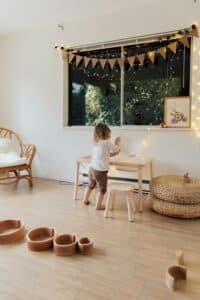
- Don’t jump in too quickly. Resist the urge to assist your child if they are momentarily stuck or bored. Studies show that allowing a child to experience — and breakthrough — periods of boredom will foster intelligence and
imagination. One of the dangers of ubiquitous media and tablet use among children is the absence of the boredom which is so necessary for childhood development. So if your child seems stuck — or even if they complain of boredom — encourage them to persist in independent play and watch their imaginative invention as they seek to overcome their own boredom.
At Milestones Learning Center we understand the different types of play and their importance in your child’s development. Make independent free play a part of your child’s routine at home, and schedule a tour today to learn what Milestones Learning Center has to offer.