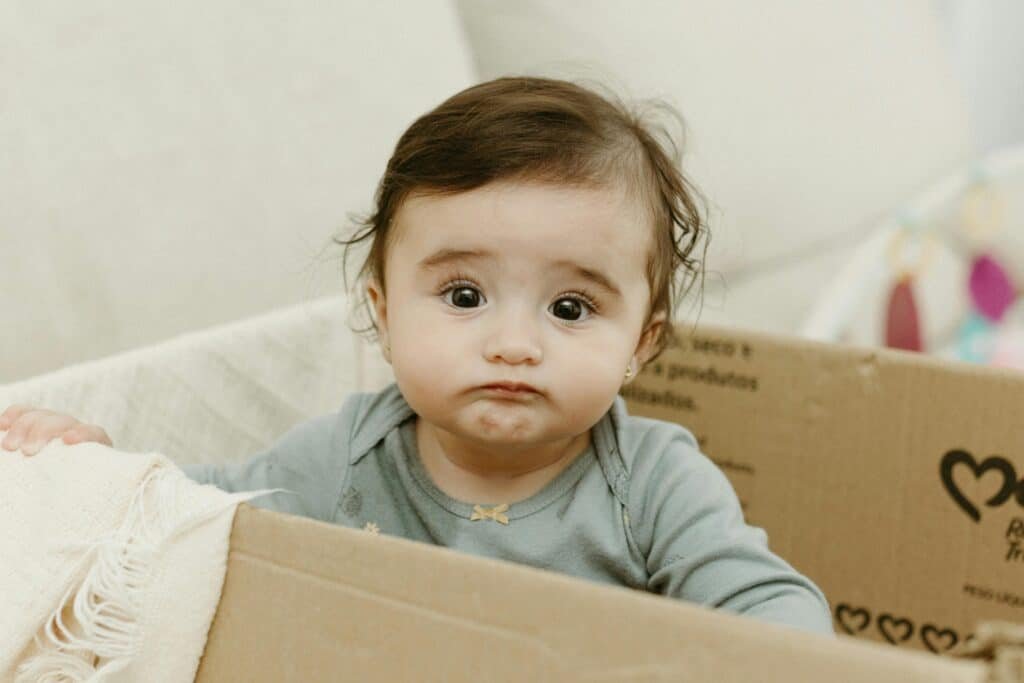
A child’s ability to learn to speak a language is near miraculous. Long before a child ever speaks his first word he is absorbing the sounds and patterns of the language around him. Research shows that young children can learn a second language much easier than adults because they are already using the brain processing power necessary to learn their first language. Far from causing confusion, early second language exposure has benefits on cognitive development that last a lifetime.
Does Exposure to Different Languages Confuse Children?
A concern some have cited for early second language exposure is the potential for confusion in children. One misunderstood behavior, often mistaken as evidence of a child’s confusion, is when a child uses words from two different languages in the same sentence. This is called code mixing. Code mixing is a normal part of bilingual development. One reason for this is that adults of some language communities code mix frequently, so children are simply copying the adults around them. Another reason is that the child simply does not know the appropriate word. Instead of confusion, however, young bilinguals show linguistic resourcefulness by borrowing words from another language. A monolingual shows linguistic resourcefulness by borrowing a more general or incorrect word from within their language to describe the object; for example, he might call every kind of plant, bush, or shrub a “tree.” A Bilingual child may borrow a the word from another language showing ingenuity. The presence of code mixing does not mean that bilingual children use language haphazardly, however. One study shows that even bilingual 2-year olds modulate their language based on the language used by the person with whom they are speaking.
Bilingual Children are Sensitive to Language Distinctions
Further disproving the concern that children are confused by bilingual exposure, one astonishing study shows that at just four months old infants can tell even rhythmically similar languages like French and Spanish apart. In fact, research shows that 4-month-old monolingual and bilingual infants can discriminate silent talking faces speaking different languages. By 8 months of age, however, only bilinguals are still sensitive to the distinction, while monolinguals stop paying attention to subtle differences in facial movements. “Instead of being confused, it seems that bilingual infants are sensitive to information that distinguishes their languages,” state Krista Byers-Heinlein and Casey Lew-Williams, authors of the National Institute of Health (NIH) science review of Bilingualism for young children.
 Children Learn Languages More Easily When They’re Young
Learning a language is a formidable task for teens and adults, but for young children still learning their primary language, the task comes easily and naturally. “Science indicates that babies’ brains are the best learning machines ever created, and that infants’ learning is time-sensitive. Their brains will never be better at learning a second language than they are between 0 and 3 years of age,” says Patricia Kuhl, a University of Washington professor of speech and hearing sciences.
Babies Are Able to Learn a Second Language Even Without Exposure at Home
When babies grow up in a bilingual household, the exposure to language happens almost effortlessly. But is there a chance for babies in monolingual households to develop the same skills? One fascinating study by University of Washington’s Institute of Learning and Brain Sciences shows that babies are able to learn a second language even if they are not exposed to it at home with just one hour a day of play-based learning in that language. Babies ages 7 months to almost 3 years were given one hour of second language exposure for 18 weeks and showed marked benefits against the control group, and retained their learning after follow up testing another 18 weeks later.
 At Milestones Learning center we know that young children are primed for language learning and benefit greatly from early second language exposure. Book a tour and learn what Milestones Learning Center has to offer today.